

Over 58% of the workforce now engages in some form of remote work, increasing reliance on employee monitoring tools. This shift has created new challenges for compliance officers and HR managers who must balance productivity oversight with legal requirements and ethical boundaries. Understanding compliance in workforce monitoring is no longer optional as regulatory scrutiny intensifies and employee expectations for privacy grow. This guide examines the legal frameworks governing employee monitoring, outlines practical compliance strategies, and provides actionable steps to implement ethical monitoring programs that protect both organizational interests and employee rights.
Table of Contents
- Current Landscape Of Workforce Monitoring And Compliance Challenges
- Legal Frameworks Governing Employee Monitoring And Compliance Requirements
- Balancing Compliance And Employee Privacy For Ethical Workforce Monitoring
- Implementing A Compliant Workforce Monitoring Program: Practical Steps And Tools
- Explore Workforce Monitoring With Aucupor
- Frequently Asked Questions About Compliance And Workforce Monitoring
Key takeaways
| Point | Details |
|---|---|
| Monitoring is widespread | Most employers now use multiple tracking methods for remote and in-office employees, creating complex compliance requirements. |
| Legal frameworks exist | ECPA and GDPR establish boundaries, but ethical considerations extend beyond minimum legal compliance. |
| Privacy balance matters | Excessive surveillance damages trust and retention, requiring careful implementation of monitoring policies. |
| Impact assessments required | Data Protection Impact Assessments help organizations evaluate risks and maintain regulatory compliance. |
| Practical tools available | Compliance-focused platforms support ethical monitoring while meeting legal and operational needs. |
Current landscape of workforce monitoring and compliance challenges
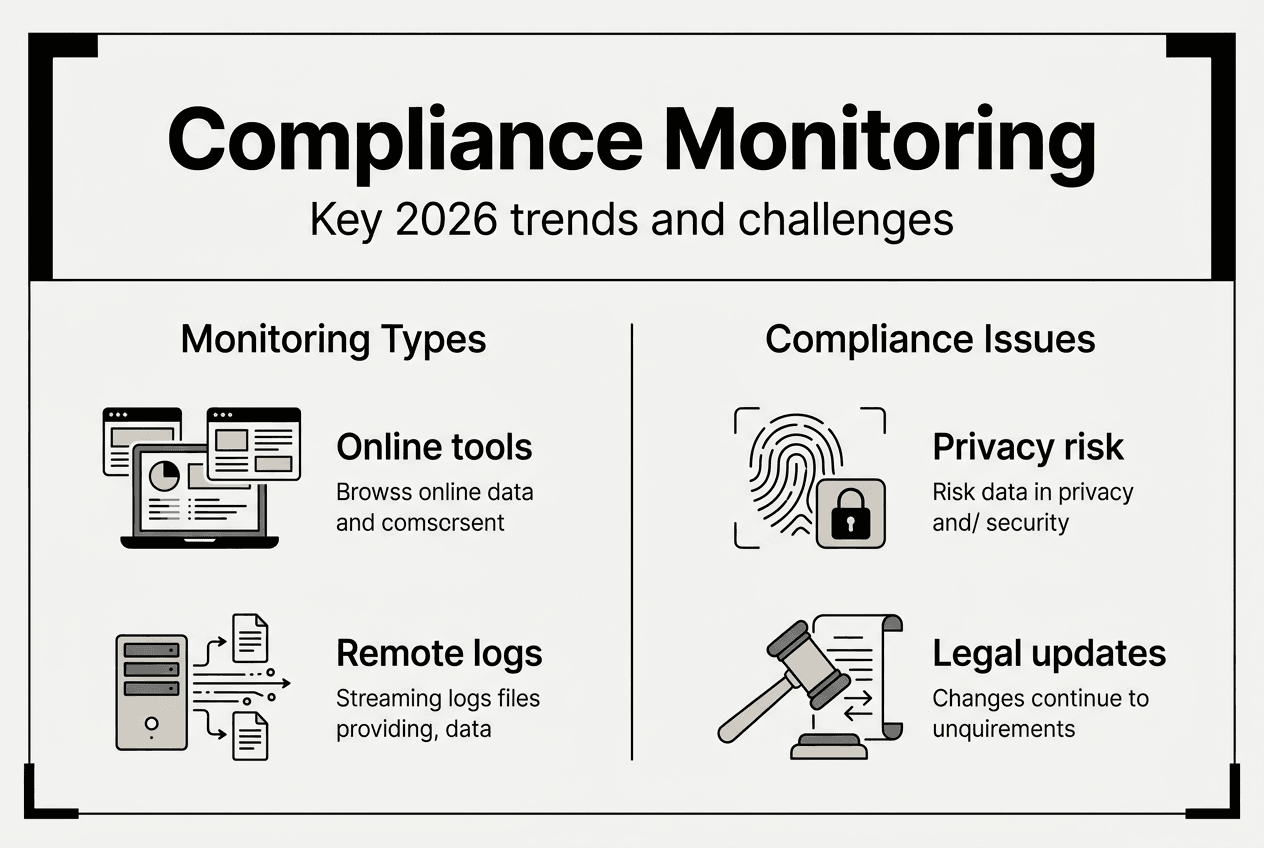
Workforce monitoring has become standard practice across industries. 74% of U.S. employers use online tracking tools, with 59% implementing real-time screen tracking and 62% monitoring web browsing logs. Physical surveillance remains equally prevalent, as 75% of employers deploy video surveillance and biometric controls in office environments.
The expansion of remote work has intensified monitoring complexity. Organizations now track employees across multiple locations, devices, and time zones. This distributed workforce model requires sophisticated monitoring platforms capable of capturing activity data while maintaining security and compliance standards.
Compliance officers face mounting pressure to balance competing interests. Business leaders demand productivity insights and security controls. Employees expect privacy protections and transparent policies. Regulators enforce strict data handling requirements. Navigating these tensions requires deep understanding of legal frameworks and ethical principles that extend beyond minimum regulatory compliance.
Common monitoring methods include:
- Real-time screen capture and video recording
- Application usage tracking and idle time measurement
- Email and communication monitoring
- Keystroke logging and mouse movement tracking
- GPS location verification for mobile workers
- Biometric authentication and physical access controls
The following table illustrates the prevalence of different monitoring approaches:
| Monitoring Type | Adoption Rate | Primary Use Case |
|---|---|---|
| Online tracking tools | 74% | Web activity and productivity measurement |
| Real-time screen tracking | 59% | Work verification and quality assurance |
| Web browsing logs | 62% | Security monitoring and policy enforcement |
| Video surveillance | 75% | Physical security and attendance verification |
| Biometric controls | 75% | Access management and identity verification |
These statistics reveal a surveillance-intensive workplace environment where compliance challenges multiply. Each monitoring method generates personal data subject to privacy regulations. Each technology introduces potential vulnerabilities and ethical concerns. Organizations must establish comprehensive compliance frameworks that address legal requirements, data security, employee rights, and operational effectiveness simultaneously.
Legal frameworks governing employee monitoring and compliance requirements
The Electronic Communications Privacy Act establishes the primary federal framework for workplace monitoring in the United States. Most monitoring practices are legal under ECPA when employers own the communication systems and provide notice to employees. However, ethical considerations extend far beyond these minimum legal standards.
ECPA permits employers to monitor business communications on company-owned systems. The law includes exceptions for personal communications and requires consideration of employee privacy expectations. Courts generally uphold monitoring when employers demonstrate legitimate business purposes, provide clear notice, and limit surveillance to work-related activities.
International regulations impose stricter requirements. The General Data Protection Regulation mandates Data Protection Impact Assessments for employee monitoring systems. Organizations processing employee data must evaluate necessity, proportionality, and risks to individual rights. Recent enforcement actions demonstrate regulators' willingness to penalize non-compliant monitoring practices.
The CNIL fined a company €40,000 for implementing disproportionate employee surveillance without conducting required impact assessments. This case highlights the importance of formal compliance procedures beyond basic legal permissions. Organizations must document their monitoring rationale, assess privacy impacts, and implement safeguards proportionate to identified risks.
Key compliance requirements include:
- Conducting Data Protection Impact Assessments before deploying monitoring systems
- Providing clear notice to employees about monitoring scope and methods
- Limiting data collection to legitimate business purposes
- Implementing appropriate technical and organizational security measures
- Establishing data retention policies and deletion procedures
- Maintaining documentation of compliance decisions and risk assessments
- Training managers and employees on monitoring policies and privacy rights
Compliance extends beyond following regulations to implementing ethical practices. Legal permission to monitor does not eliminate the need for restraint and respect. Organizations using compliance monitoring tools must consider employee dignity, trust, and morale alongside legal obligations.
"Compliance officers must recognize that legal authorization represents the floor, not the ceiling, for acceptable monitoring practices. Building sustainable workforce oversight requires balancing legitimate business interests with employee privacy expectations and organizational culture."
The regulatory landscape continues evolving as legislators respond to technological advances and changing work patterns. Compliance officers must monitor legal developments, update policies regularly, and maintain flexible frameworks capable of adapting to new requirements. Proactive compliance strategies reduce legal risks while supporting positive employee relations and organizational reputation.
Balancing compliance and employee privacy for ethical workforce monitoring
Excessive monitoring severely damages employee trust and retention. 1 in 6 workers would quit over workplace surveillance concerns, creating significant turnover costs and cultural challenges. Organizations must implement monitoring programs that respect privacy while achieving legitimate business objectives.

Transparency forms the foundation of ethical monitoring. Employees deserve clear information about what data is collected, how it is used, who can access it, and how long it is retained. Hidden surveillance erodes trust and creates adversarial relationships that undermine productivity and engagement. Open communication about monitoring purposes and limitations demonstrates respect and builds acceptance.
Data minimization principles require collecting only information necessary for specific business purposes. Organizations should resist the temptation to gather comprehensive data simply because technology enables it. Each additional data point increases privacy risks, compliance obligations, and potential for misuse. Focused monitoring targeting genuine business needs reduces these risks while maintaining effectiveness.
Employee involvement in policy development increases acceptance and identifies potential concerns early. Workers understand which monitoring methods feel invasive versus reasonable. Their input helps organizations design programs that balance oversight needs with dignity and autonomy. Collaborative policy creation transforms monitoring from a top-down imposition into a shared framework supporting mutual interests.
Best practices for ethical monitoring include:
- Provide written notice explaining monitoring scope, methods, and purposes before implementation
- Limit surveillance to work hours and work-related activities, avoiding personal communications
- Conduct formal Data Protection Impact Assessments evaluating risks and mitigation measures
- Implement technical controls restricting access to monitoring data based on legitimate need
- Establish clear policies governing data use, retention, and deletion
- Train managers on appropriate use of monitoring information and privacy obligations
- Create grievance procedures allowing employees to raise concerns about monitoring practices
- Review monitoring scope regularly, eliminating unnecessary data collection
Pro Tip: Involve employee representatives in developing monitoring policies and conducting impact assessments. Their participation increases buy-in, identifies privacy concerns you might miss, and demonstrates commitment to ethical implementation.
Balancing technical monitoring capabilities with cultural respect requires ongoing attention. Organizations using ethical monitoring platforms must combine technology with clear policies, manager training, and open communication. This comprehensive approach protects both business interests and employee rights while maintaining productive, trusting workplace relationships.
The consequences of imbalanced monitoring extend beyond turnover. Excessive surveillance creates stress, reduces creativity, and encourages counterproductive behaviors like activity simulation. Employees focus on appearing busy rather than delivering results. Trust erosion damages collaboration and knowledge sharing. These cultural costs often outweigh any productivity gains from intensive monitoring.
Implementing a compliant workforce monitoring program: practical steps and tools
Creating a compliant monitoring program requires systematic planning and execution. Organizations must define clear objectives, assess legal requirements, select appropriate tools, and implement comprehensive policies before deploying monitoring systems. This structured approach ensures compliance while supporting business goals and employee relations.
Implementation steps include:
- Define specific business objectives for monitoring, such as security, productivity, or quality assurance
- Research applicable legal requirements including federal, state, and international regulations
- Conduct Data Protection Impact Assessments evaluating privacy risks and mitigation strategies
- Select monitoring tools offering necessary features with appropriate privacy controls and security measures
- Develop written policies explaining monitoring scope, purposes, data handling, and employee rights
- Provide comprehensive notice to employees before activating monitoring systems
- Train managers on policy compliance, appropriate data use, and privacy obligations
- Implement technical controls restricting monitoring data access based on role and need
- Establish audit procedures verifying ongoing compliance with policies and regulations
- Review monitoring scope periodically, adjusting practices based on effectiveness and impact
Tool selection significantly impacts compliance and effectiveness. Over 73% of companies use online monitoring tools as part of workforce management, but not all platforms support ethical implementation equally. Organizations should evaluate monitoring solutions based on compliance features, privacy controls, transparency capabilities, and alignment with organizational values.
The following comparison highlights key features for compliance-focused monitoring:
| Feature | Compliance Benefit | Implementation Consideration |
|---|---|---|
| Role-based access controls | Limits data exposure to authorized personnel | Requires careful role definition and regular access reviews |
| Data encryption | Protects monitoring information from unauthorized access | Must cover data in transit and at rest |
| Audit logging | Documents system access and data usage for accountability | Generates additional data requiring secure storage |
| Configurable monitoring scope | Enables data minimization aligned with business needs | Requires thoughtful configuration based on legitimate purposes |
| Employee notification features | Supports transparency requirements | Must be clearly visible and understandable |
| Data retention controls | Automates deletion per policy requirements | Needs alignment with legal and business retention needs |
Continuous evaluation ensures monitoring programs remain compliant as regulations evolve and business needs change. Regular audits verify policy adherence, identify potential issues, and demonstrate commitment to responsible practices. Employee feedback provides insights into monitoring impact and opportunities for improvement.
Pro Tip: Schedule quarterly reviews of your monitoring program examining data collection scope, access patterns, employee feedback, and regulatory changes. This regular evaluation helps you identify and address compliance gaps before they become serious problems.
Organizations implementing workforce monitoring solutions must balance technical capabilities with ethical constraints. The most sophisticated monitoring technology becomes a liability when deployed without proper policies, training, and oversight. Successful programs combine appropriate tools with comprehensive governance frameworks supporting compliance, privacy, and organizational culture.
Training represents a critical but often overlooked implementation component. Managers accessing monitoring data need clear guidance on appropriate use, privacy obligations, and decision-making frameworks. Employees deserve education about their rights, policy details, and grievance procedures. Comprehensive training programs reduce compliance risks while building understanding and acceptance across the organization.
Explore workforce monitoring with Aucupor
Navigating compliance challenges requires tools designed to support ethical monitoring practices. Aucupor platform offers comprehensive workforce monitoring capabilities built with privacy controls and transparency features that facilitate regulatory compliance. The platform provides real-time activity tracking, application monitoring, and security assessment while incorporating role-based access controls that restrict data visibility based on legitimate need.
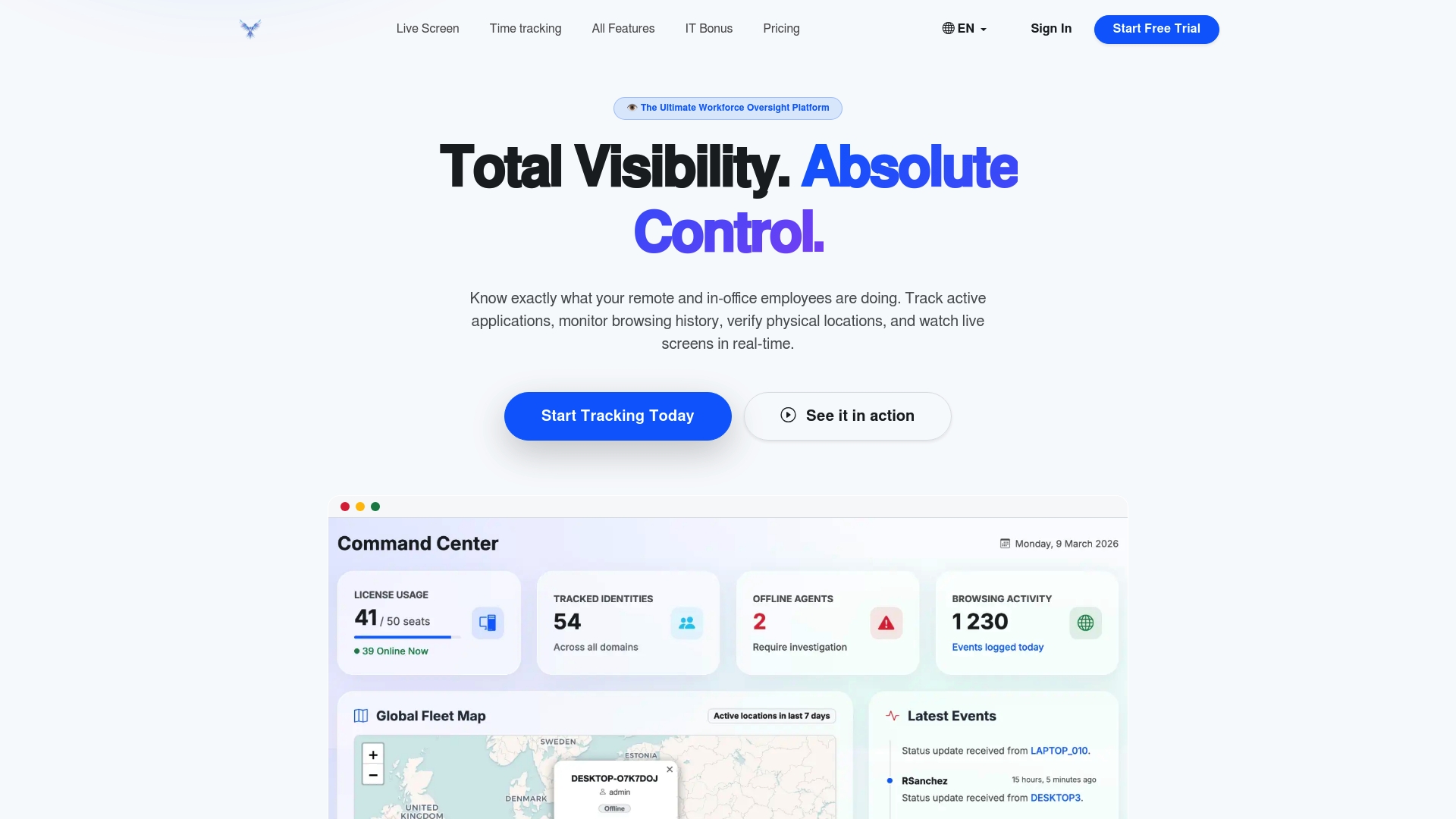
Compliance officers and HR managers benefit from features supporting Data Protection Impact Assessments and documentation requirements. The platform's EU-based infrastructure ensures GDPR compliance and data sovereignty for organizations with international operations. Configurable monitoring scope enables data minimization aligned with specific business purposes rather than comprehensive surveillance.
Explore the Aucupor monitoring solution to discover how purpose-built tools support balanced workforce oversight. The platform combines necessary monitoring capabilities with privacy safeguards and compliance features, helping organizations achieve productivity insights while respecting employee rights and meeting regulatory obligations in 2026's complex compliance environment.
Frequently asked questions about compliance and workforce monitoring
When is employee monitoring legally permitted under ECPA?
The Electronic Communications Privacy Act permits monitoring when employers own the communication systems, provide notice to employees, and demonstrate legitimate business purposes. Exceptions exist for personal communications and situations where employees have reasonable privacy expectations. Organizations should consult legal counsel to ensure specific monitoring practices comply with federal and state requirements.
How should organizations handle employee consent and notification?
Provide clear written notice explaining monitoring scope, methods, purposes, and data handling practices before implementation. Notice should be specific rather than general, detailing what systems are monitored and what information is collected. While consent requirements vary by jurisdiction, transparent communication builds trust and supports compliance regardless of legal mandates.
What strategies minimize employee dissatisfaction with monitoring?
Involve employees in policy development, limit monitoring to work hours and activities, explain business purposes clearly, and demonstrate restraint in data collection. Focus surveillance on outcomes rather than constant activity tracking. Provide access to personal monitoring data and establish clear grievance procedures. These practices show respect for employee dignity while achieving business objectives.
What steps are involved in conducting Data Protection Impact Assessments?
Identify the monitoring systems and data processing activities, describe business purposes and necessity, assess risks to employee privacy and rights, evaluate proportionality of monitoring methods, document safeguards and mitigation measures, and establish review procedures. Workforce monitoring compliance requires formal DPIA documentation before deploying new monitoring technologies or significantly changing existing programs.
Which tools facilitate compliance and ethical monitoring?
Look for platforms offering role-based access controls, configurable monitoring scope, data encryption, audit logging, employee notification features, and automated retention controls. Tools should support data minimization, provide transparency capabilities, and include compliance documentation features. Evaluate vendors based on their commitment to ethical monitoring principles and regulatory alignment rather than simply technical capabilities.