

Managing hybrid teams in 2026 means facing a fundamental challenge: how do you measure productivity when you can't see your employees working? 85% of leaders struggle with confidence in employee productivity across distributed teams. This uncertainty undermines trust and decision making. The solution lies in systematic, transparent productivity tracking that respects employee autonomy while delivering actionable insights. This guide walks you through preparing, implementing, and refining productivity tracking methods that work for modern hybrid environments.
Table of Contents
- Understanding Productivity Challenges In Hybrid Work Environments
- Preparing To Track Productivity: Tools And Prerequisites
- Step-By-Step Process For Tracking Productivity Effectively
- Verifying And Improving Productivity Tracking Results
- Enhance Your Productivity Tracking With Aucupor Platform
Key takeaways
| Point | Details |
|---|---|
| Hybrid work complicates visibility | Leaders lose confidence in productivity measurement without direct observation of employee work |
| Structured tracking restores control | Systematic monitoring with clear metrics helps managers regain productivity insights |
| Initial onboarding matters | In-person training for remote employees boosts long-term productivity and retention |
| Balance transparency with privacy | Effective tracking requires clear communication and ethical data practices |
| Continuous improvement is essential | Regular reviews and adjustments keep productivity tracking relevant and accurate |
Understanding productivity challenges in hybrid work environments
Hybrid work fundamentally changed how managers assess team performance. When employees split time between home and office, traditional oversight methods fail. You can't walk past desks, observe collaboration, or gauge engagement through casual interactions. This visibility gap creates anxiety for leadership teams trying to maintain standards.
The data reveals the scale of this problem. 85% of leaders find it difficult to trust employee productivity in hybrid settings. Without clear signals, managers default to assumptions or outdated metrics that don't reflect actual output. Meanwhile, fully remote work increased productivity by 10% while expanding workforce diversity, proving that location flexibility delivers real benefits when managed properly.
The core challenge isn't whether remote employees work effectively. It's establishing reliable measurement systems that work across locations and schedules. Hybrid models introduce variables that complicate tracking:
- Asynchronous work patterns across time zones
- Varied communication channels and collaboration tools
- Different home office setups affecting work styles
- Reduced informal feedback opportunities
- Inconsistent visibility into daily activities
These factors don't diminish productivity. They obscure it. Managers need structured approaches to cut through the noise and identify genuine performance patterns. An employee monitoring platform provides the systematic data collection that replaces guesswork with evidence.
"The shift to hybrid work demands new management practices. Leaders who adapt their measurement approach gain competitive advantage through better resource allocation and employee development."
Successful productivity tracking in 2026 requires acknowledging that presence doesn't equal performance. Output quality, deadline adherence, and collaboration effectiveness matter more than hours logged or physical location. Building systems that capture these meaningful indicators positions your organization to thrive in distributed work environments.
Preparing to track productivity: tools and prerequisites
Effective productivity tracking starts long before you deploy any software. Preparation determines whether your tracking initiative builds trust or breeds resistance. Begin by selecting appropriate tools that match your organizational needs and technical capabilities.

Your productivity tracking software should offer comprehensive monitoring features without overwhelming users. Look for platforms that provide activity logging, application usage tracking, and detailed reporting dashboards. The right workforce control platform balances thorough data collection with user privacy protections through role-based access controls.
Defining clear productivity metrics comes next. Generic measurements like time spent online fail to capture actual contribution. Instead, establish role-specific KPIs that reflect genuine output:
| Role Type | Primary Metrics | Secondary Indicators |
|---|---|---|
| Software developers | Code commits, bug fixes, feature completion | Code review participation, documentation quality |
| Customer support | Ticket resolution time, satisfaction scores | First-contact resolution rate, escalation frequency |
| Sales teams | Pipeline progression, deal closure rate | Prospecting activity, client meeting frequency |
| Project managers | Milestone completion, budget adherence | Team coordination effectiveness, risk mitigation |
Communication forms the foundation of ethical tracking. Employees must understand what data you collect, why you collect it, and how you use it. Transparency prevents the surveillance anxiety that tanks morale and productivity. Schedule team meetings to explain your tracking approach, answer questions, and address concerns directly.
Consider implementing hybrid onboarding for new remote employees. Initial in-person training improves productivity and retention by establishing relationships and cultural understanding that persist through remote work. This investment pays dividends in long-term performance and reduced turnover.
Pro Tip: Create a written productivity tracking policy that outlines data collection practices, employee rights, and dispute resolution procedures. Distribute this document during onboarding and make it easily accessible for reference.
Privacy considerations extend beyond legal compliance. Even when monitoring is permitted, excessive surveillance damages trust and autonomy. Focus data collection on work-related activities during business hours. Avoid capturing personal information or monitoring outside designated work periods. Balance organizational needs with employee dignity to build sustainable tracking systems that people accept rather than resent.
Step-by-step process for tracking productivity effectively
Implementing productivity tracking requires a structured approach that builds confidence gradually. Rushing deployment creates confusion and resistance. Follow these steps to establish tracking that delivers reliable insights while maintaining team morale.
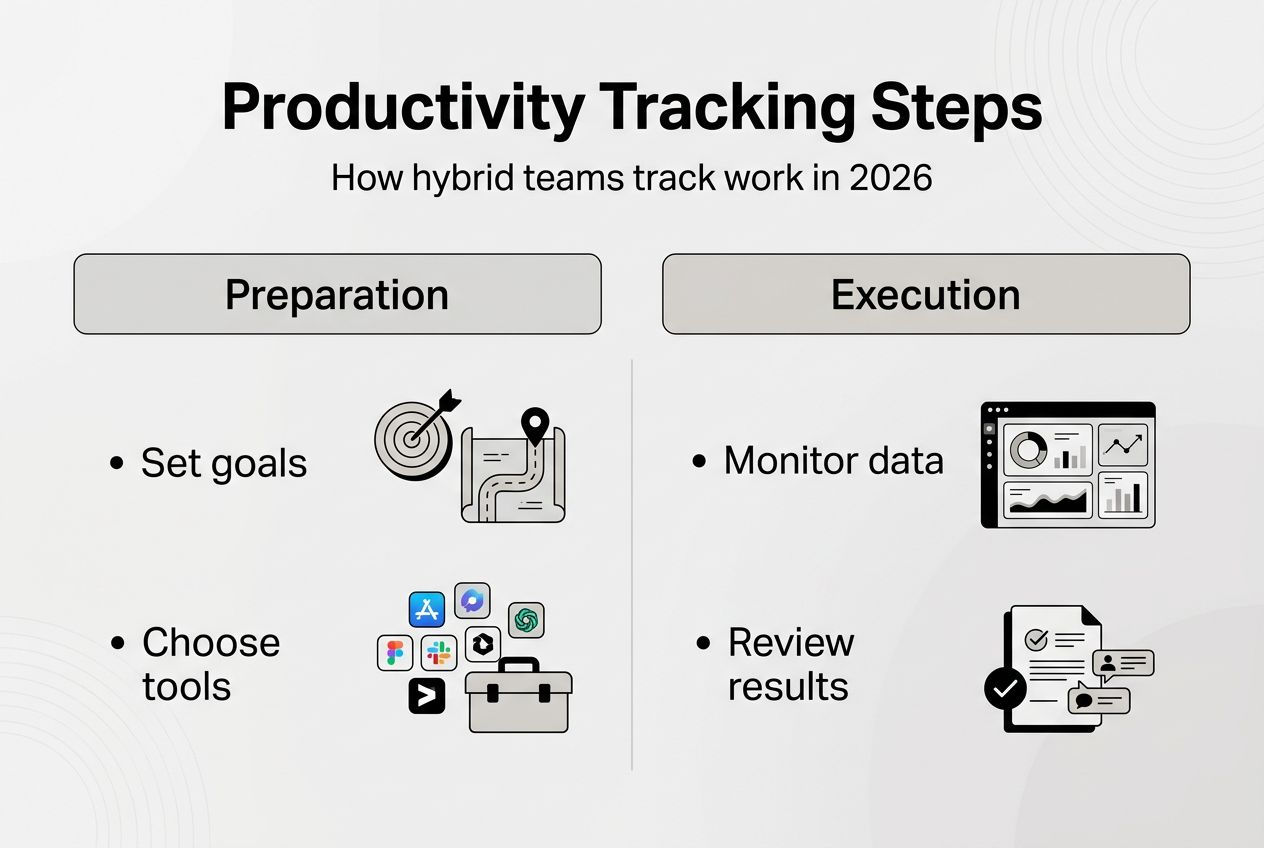
Step 1: Set baseline productivity metrics and goals. Before tracking begins, document current performance levels across your team. Identify average output rates, typical project timelines, and standard quality benchmarks. These baselines provide context for interpreting future data. Without them, you can't distinguish improvement from regression or identify outliers accurately.
Step 2: Deploy monitoring technology with complete transparency. Install your chosen employee productivity tracking software with full team awareness. Provide training sessions that explain how the system works, what data it captures, and how employees can access their own productivity reports. Transparency eliminates the fear and resentment that secretive monitoring creates.
Step 3: Collect and analyze data regularly on daily or weekly cycles. Establish consistent review schedules that match your work rhythms. Daily check-ins work for fast-paced environments with short deliverable cycles. Weekly reviews suit projects with longer timelines. Consistency matters more than frequency. Regular analysis helps you spot trends before they become problems.
Step 4: Conduct one-on-one reviews to discuss productivity insights. Data without dialogue breeds misunderstanding. Schedule individual meetings where you review metrics collaboratively. Ask employees to interpret their own data first. This approach surfaces context that raw numbers miss and demonstrates respect for their perspective. Remote employees with effective monitoring showed improved productivity and engagement when tracking included regular feedback conversations.
Step 5: Adjust goals and methods according to data and feedback. Productivity tracking isn't static. As you gather information, refine your KPIs to better reflect actual value creation. Remove metrics that don't correlate with outcomes. Add measurements that capture previously invisible contributions. This iterative improvement keeps your tracking relevant as work patterns evolve.
Comparing tracking approaches helps you choose the right balance for your organization:
| Approach | Advantages | Limitations |
|---|---|---|
| Self-reporting | Builds trust, captures context, low technical overhead | Prone to bias, inconsistent accuracy, time-consuming |
| Automated monitoring | Objective data, comprehensive coverage, minimal employee effort | Misses context, may feel invasive, requires technology investment |
| Hybrid model | Combines objective metrics with employee input, balanced perspective | More complex to implement, requires coordination between systems |
Pro Tip: Start with lighter monitoring and increase depth gradually as your team adapts. Beginning with comprehensive surveillance triggers resistance. Building up from basic metrics to detailed tracking gives everyone time to adjust and builds acceptance through demonstrated value.
The key to successful implementation lies in treating productivity tracking as a collaborative improvement tool rather than a punitive surveillance system. When employees see tracking data helping them identify obstacles and optimize their workflows, they become advocates instead of opponents.
Verifying and improving productivity tracking results
Collecting productivity data is pointless if you don't verify its accuracy and act on insights. Raw metrics often contain anomalies, measurement errors, or contextual factors that skew interpretation. Developing verification practices ensures your decisions rest on solid evidence.
Start by reviewing discrepancies between expected and actual productivity patterns. When an employee's metrics suddenly drop, investigate before drawing conclusions. Technical issues, personal circumstances, or project complexity shifts might explain the change. Jumping to performance concerns without verification damages relationships and wastes time on non-problems.
Data-driven decisions must respect employee privacy and morale. Avoid using productivity metrics as the sole basis for performance evaluations. Combine quantitative data with qualitative assessments, peer feedback, and outcome quality reviews. This holistic approach prevents the reductive thinking that treats employees as productivity machines rather than complex professionals.
Common mistakes undermine even well-intentioned tracking programs:
- Misinterpreting correlation as causation in productivity patterns
- Over-monitoring to the point of micromanagement
- Ignoring employee feedback about metric relevance
- Failing to account for different work styles and peak productivity times
- Using tracking data punitively rather than developmentally
Address these pitfalls through continuous calibration. Schedule quarterly reviews of your tracking methodology with team input. Ask what metrics feel meaningful versus arbitrary. Identify data points that don't inform decisions and eliminate them to reduce monitoring overhead.
Feedback loops transform static tracking into dynamic improvement systems. When employees see their input shaping how you measure productivity, they engage more authentically with the process. Create channels for suggesting metric adjustments, reporting technical issues, or questioning data interpretations. This two-way communication builds the trust necessary for tracking to enhance rather than erode workplace culture.
Continuous training keeps everyone aligned as tracking systems evolve. When you modify KPIs or introduce new monitoring tools, provide updated guidance. Regular refreshers on interpreting personal productivity dashboards help employees use data for self-improvement. Managers need ongoing education about avoiding bias in data interpretation and conducting productive performance conversations around metrics.
The goal isn't perfect measurement. It's developing increasingly accurate understanding that informs better decisions about resource allocation, professional development, and workflow optimization. Verification and improvement practices ensure your monitoring and productivity verification systems mature alongside your organization's needs.
Enhance your productivity tracking with Aucupor platform
Implementing the productivity tracking strategies outlined above requires robust technology that balances comprehensive monitoring with ethical data practices. The Aucupor employee monitoring platform delivers exactly this combination for organizations managing hybrid workforces in 2026.
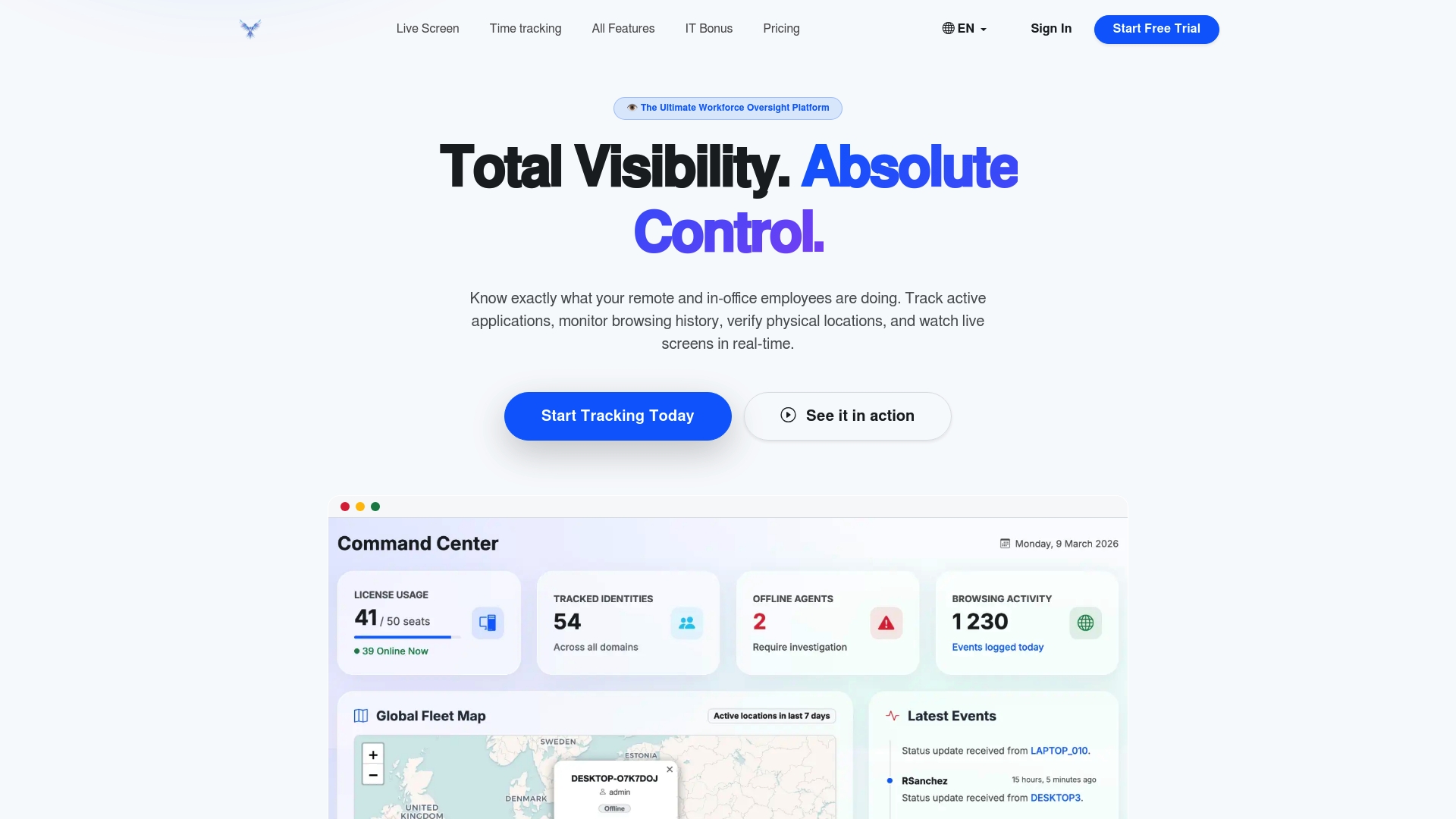
Aucupor provides real-time activity tracking, application usage monitoring, and detailed productivity analytics through an intuitive dashboard. The platform's invisible agent captures desktop activity without disrupting employee workflows, while granular role-based access controls ensure data visibility aligns with organizational hierarchies. This approach gives managers the insights they need without compromising individual privacy.
What sets Aucupor apart is its commitment to data sovereignty and regulatory compliance. Hosted entirely within European Union infrastructure, the workforce control software meets GDPR requirements and other EU regulations that protect employee rights. For organizations operating across borders, this compliance foundation removes legal uncertainty from productivity tracking initiatives.
The platform supports the transparent, metrics-driven approach this guide recommends. Employees can access their own productivity data, managers receive actionable reports without information overload, and leadership gains the confidence to make strategic workforce decisions based on evidence rather than assumptions. In 2026's hybrid work landscape, Aucupor transforms productivity tracking from a management challenge into a competitive advantage.
FAQ
What are the best productivity metrics to track in hybrid teams?
Focus on output quality, deadline adherence, and collaboration effectiveness rather than time-based measurements. Track deliverable completion rates, project milestone achievement, and peer feedback scores. Combine quantitative indicators like task throughput with qualitative assessments of work quality. Role-specific metrics work better than generic activity monitoring because they reflect actual value creation.
How can managers ensure employee privacy while using monitoring tools?
Communicate clearly about what data you collect, when collection occurs, and who accesses the information. Use anonymized or aggregated data for team-level analysis whenever possible. Implement role-based access controls that limit data visibility to those with legitimate need. Adopt transparent policies that employees review and acknowledge, ensuring informed consent rather than surveillance by surprise.
What common mistakes should be avoided in productivity tracking?
Avoid micromanagement that monitors every minute rather than focusing on outcomes. Don't rely solely on quantitative data without considering context, personal circumstances, or work complexity. Resist using tracking data punitively, which destroys trust and encourages gaming metrics. Regularly calibrate KPIs based on employee feedback to prevent measuring activities that don't correlate with actual productivity.
Is initial in-person onboarding necessary for remote employee productivity?
Fully remote employees with initial in-person training showed higher long-run productivity and lower attrition compared to those onboarded entirely remotely. Face-to-face interaction during onboarding builds relationships, establishes cultural understanding, and creates communication foundations that persist through remote work. Consider hybrid onboarding models that combine brief in-person sessions with ongoing remote support for optimal results without excessive travel costs.